Buying a modular home can feel efficient, affordable, and refreshingly predictable. The factory-built sections arrive with walls, wiring, insulation, and sometimes kitchen cabinets already installed. Yet the process still demands careful judgment. A beautiful model home can hide expensive site work, unclear contracts, or unsuitable land conditions.
So, what are the common mistakes when buying a modular home? Buyers often focus on the displayed price and overlook transportation, foundation work, permits, utility connections, drainage, and local upgrades. A narrow rural road may require special delivery planning. A sloped lot may need costly excavation before installation begins. These details can change the final budget dramatically.
Tom Hardiman Jr., an industry expert and executive director of the Modular Building Institute, has said, “Modular construction is a process, not a product.” That distinction matters. A modular home is not simply a cheaper house selected from a catalog. It is a coordinated project involving the manufacturer, builder, transporter, installer, lender, and local authorities.
The following seven tips will help buyers examine those connections before signing. They cover factory standards, land inspections, total pricing, warranties, financing, and communication. Some advice may seem obvious. It is easy to ignore obvious details when a showroom feels exciting.
A careful buyer should question every allowance, deadline, and promised feature. Ask what happens when rain delays foundation work. Ask who repairs transport damage. Ask whether the quoted windows meet local energy requirements. Small questions can prevent large surprises. Mistakes are not always dramatic. Sometimes, they begin with one unchecked assumption.
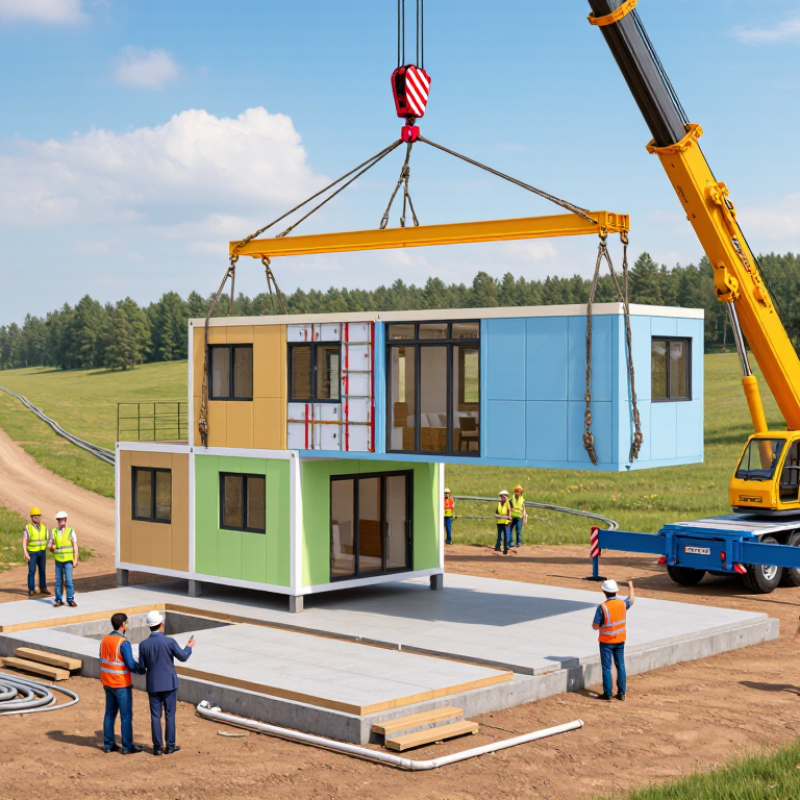
7 Tips to Avoid Common Mistakes When Buying a Modular Home
Define your housing needs before reviewing floor plans. List daily routines, household size, storage needs, accessibility concerns, and future changes. Measure your largest furniture, not just the rooms. A beautiful layout can fail when a sofa blocks the hallway. Check local zoning, setbacks, foundation rules, and delivery access before signing anything. A narrow bridge or low tree can change the entire installation plan. Site preparation is often underestimated. Soil testing, grading, utility connections, permits, transport, and foundation work may sit outside the advertised home price.
Build a budget around the finished property, not the factory quote. The National Association of Home Builders reported that construction represented 64.4% of a new home’s final sales price in its 2024 survey. That figure shows how much other costs can matter. Request an itemized estimate with allowances and change-order fees. Compare loan terms carefully, including construction-period interest and insurance. Keep a realistic contingency fund. Mine would be larger than expected.
Think beyond move-in day. The U.S. Department of Energy notes that heating and cooling account for about 48% of household energy use. Ask about insulation, air sealing, window performance, and mechanical-system efficiency. Also inspect warranty coverage, maintenance access, resale appeal, and expected household changes. The Harvard Joint Center for Housing Studies continues to document severe housing affordability pressure, so an oversized plan may create long-term financial strain. A smaller home with flexible rooms may serve you better. Recheck every assumption.
7 Tips to Avoid Common Mistakes When Buying a Modular Home
Tip 1: Research the home type before comparing prices. Modular, panelized, and manufactured homes follow different construction processes and standards. A permanent modular home is built in factory sections, then assembled on a prepared foundation. Check whether the design meets your local building code. Do not rely on labels alone.
Tip 2: Investigate builders like a careful homeowner, not an excited shopper. Request several completed-project addresses, recent customer references, and proof of insurance. Ask who handles transportation, foundation work, utility connections, and inspections. These details can change the final cost. I once assumed the advertised price covered everything. That assumption was wrong.
Tip 3: Compare construction standards in writing. Ask about moisture protection, insulation levels, roof loads, window ratings, and fastening methods. Review the factory’s quality-control process and request copies of inspection records. An independent inspector can examine the foundation and finished installation. It may feel unnecessary. It is not.
Tip 4: Visit the factory if possible. Look for dry storage, organized materials, sealed wall openings, and consistent workmanship. Take photographs and record questions. Also review the contract slowly, especially change fees, delivery limits, repair duties, and completion dates. Builders can explain technical terms, but you should still verify every important promise.
Buying a modular home can look simple until the land changes the budget. A beautiful listing means little if the soil cannot support the foundation. Hire a qualified local surveyor to check slope, drainage, flood exposure, access, and boundary lines. Ask for a recent soil report, not a casual verbal opinion. Small details matter. Standing water near the driveway may signal costly grading or drainage work. Confirm road width and delivery clearance before ordering the home.
Zoning rules deserve the same attention as the floor plan. Contact the local planning office for written confirmation of permitted use, setbacks, height limits, lot coverage, and design requirements. Some areas treat modular homes differently from mobile units. That distinction can affect approval and resale. Check overlays, conservation limits, and private covenants too. A seller’s confidence is not a permit. Do not rely on assumptions.
Ask the building department which permits cover the home, foundation, transport, installation, electrical, plumbing, and final occupancy. Requirements vary by location, and incomplete applications can delay delivery. Get a written schedule and identify who handles each submission. Utility access needs proof, not optimism. Confirm connection points, fees, easements, and capacity for water, sewer, power, gas, and internet. If public services are unavailable, price a well, septic system, storage tank, or extended utility lines. It is easy to underestimate site costs on paper; the ground usually wins. Recheck every quote after the site visit.
Complete every verification before signing a purchase contract. A value of 100% means the item should be confirmed with written evidence from the relevant authority, utility provider, surveyor, or seller.
The checklist covers the main pre-purchase risks: site conditions, zoning, permits, utility access, transportation, builder credentials, and contract terms. Requirements vary by location, so confirm local rules before committing.
Buying a modular home requires more than comparing factory prices. Compare the complete cost, including land preparation, foundation work, delivery, crane access, permits, utility connections, taxes, and final inspections. Transport can be expensive. NAHB’s 2024 Cost of Constructing a Home Survey reported average construction costs of $428,215, representing 64.4% of the final sales price. That figure is a useful benchmark, not a modular-home promise. Request a line-item quote with allowances clearly identified. Cheap quotes can mislead.
Read the contract before paying a deposit. Confirm the build schedule, delivery date, change-order fees, cancellation terms, and responsibility for site delays. Require written details for structural, workmanship, and appliance warranties. Check who handles repairs after installation, and note every claim deadline. Financing also deserves careful comparison. The Consumer Financial Protection Bureau states that closing costs commonly range from 2% to 5% of the purchase price. Compare annual percentage rates, loan fees, rate-lock periods, draw schedules, and conversion conditions for construction financing. Ask whether your lender requires inspections before releasing funds. I would keep a contingency reserve for overlooked site work. Plans change.
Use this comparison checklist before signing a modular-home purchase agreement. Cost ranges are general planning benchmarks in the United States and vary by location, design, site conditions, labor rates, permits, and specifications. Request written, itemized figures for your specific project.
| Tip | What to Compare | Questions and Documents to Request | Useful Planning Benchmarks | Common Mistake to Avoid |
|---|---|---|---|---|
| 1. Compare the complete project cost | Base home price versus the total delivered and completed price, including land preparation, transportation, foundation, utility connections, permits, inspections, taxes, site work, installation, and final finishing. | Ask for a line-item cost schedule showing included, excluded, estimated, and allowance amounts. Confirm who is responsible for the driveway, grading, septic or sewer connection, water service, electrical work, steps, porches, decks, and landscaping. | Site and foundation work can add tens of thousands of dollars. Transportation and crane or set costs may also be substantial, especially for remote or difficult-access sites. Treat allowances as estimates, not fixed prices. | Choosing the lowest advertised base price without pricing the land, site, foundation, delivery, installation, and required upgrades. |
| 2. Verify the home and site are legally compatible | Local zoning, building-code requirements, design restrictions, foundation type, setbacks, flood or wildfire requirements, access roads, and availability of utilities. | Obtain written confirmation from the local building department or planning office. Check the certificate of occupancy process, permit fees, minimum roof or exterior requirements, delivery-route access, and whether the proposed foundation is approved for the site. | Modular homes are generally built to applicable state or local building codes, but the site still requires permits, inspections, engineering, and code-specific foundation work. | Ordering the home before confirming zoning, permit requirements, soil conditions, utility access, and whether large delivery vehicles can reach the property. |
| 3. Read the contract for scope, deadlines, and change orders | Payment schedule, project milestones, delivery date, installation responsibilities, completion standards, change-order pricing, cancellation rights, delay provisions, dispute resolution, and responsibility for damage during transport or installation. | Request the full purchase agreement, specifications, drawings, inclusions and exclusions list, construction schedule, change-order form, and any separate installation or site-work contracts. Confirm whether prices are fixed or subject to escalation. | A written change order should identify the revised price, schedule impact, and both parties' approval before work begins. A verbal promise is difficult to enforce. | Signing a short quote that does not define completion, delivery, site responsibilities, allowances, weather delays, or the process for correcting incomplete work. |
| 4. Compare specifications instead of room counts | Structural system, insulation levels, windows, roofing, siding, heating and cooling equipment, electrical capacity, plumbing fixtures, cabinetry, flooring, appliances, accessibility features, and energy-efficiency options. | Compare identical floor plans using a written specification sheet. Ask which items are standard, upgraded, discontinued, or owner-supplied. Confirm product performance ratings, installation standards, and whether substitutions require approval. | Energy performance depends on the complete assembly—insulation, air sealing, windows, HVAC equipment, ductwork, and installation quality—not on one advertised feature alone. | Comparing homes by square footage or bedroom count while overlooking lower-grade finishes, missing appliances, reduced electrical capacity, or expensive upgrade packages. |
| 5. Examine warranty coverage and post-installation service | Structural coverage, workmanship, materials, appliances, mechanical systems, water intrusion, transportation or installation damage, exclusions, claim deadlines, and the process for resolving defects. | Request the complete written warranty before purchase. Confirm the warranty start date, claim submission method, response times, labor coverage, transferability, exclusions for owner work, and whether separate warranties apply to the foundation, site work, and appliances. | Warranty periods differ by contract and jurisdiction. Coverage may be separate for structural components, workmanship, appliances, and manufacturer-supplied equipment, so do not assume one document covers everything. | Relying on a sales representative's verbal warranty description or assuming that site-installed work is covered by the same warranty as factory-built components. |
| 6. Compare financing based on the full cash requirement | Construction-to-permanent loans, land loans, conventional mortgages, down payment, interest rate, points, closing costs, draw schedule, appraisal method, debt-to-income requirements, and whether the lender accepts the home's classification and foundation type. | Request written loan estimates from multiple lenders. Ask when funds are released, how change orders are handled, what happens if the appraisal is lower than the contract price, and whether land equity can count toward the required contribution. | Construction financing can involve interest-only payments during building, lender inspections, draw fees, reserves, and conversion conditions. The lowest rate may not produce the lowest total cost. | Comparing monthly principal and interest only while ignoring land costs, prepaid interest, lender fees, closing costs, temporary housing, taxes, insurance, and cash needed for unexpected site work. |
| 7. Inspect at key stages and keep a completion record | Factory quality-control records, delivery condition, foundation preparation, set and connection work, interior finish, mechanical operation, drainage, water intrusion, punch-list items, and final inspection approval. | Arrange an independent inspection where permitted, photograph the home before and after delivery, keep approved drawings and receipts, document all defects in a punch list, and obtain final permits, inspection reports, lien releases, and the certificate of occupancy. | A final walkthrough should occur before final payment when possible. Retain all project records for warranty claims, insurance, refinancing, resale, and future maintenance. | Paying the final balance before unresolved defects, missing documents, incomplete site work, or inspection issues have been recorded and assigned a completion date. |
Important: Financing terms, building requirements, contract rights, taxes, and warranty protections depend on the property location and the signed agreements. Consult the local authority having jurisdiction, a qualified inspector, and an independent real-estate or construction attorney before committing funds.
Buying a modular home requires more than admiring its finished walls. The Modular Building Institute’s 2024 annual report valued North American commercial modular construction at about $20.3 billion in 2023. That scale makes disciplined inspection essential. Before delivery, check framing, roof lines, moisture marks, window seals, plumbing connections, and electrical panels. Photograph every room. Record defects beside their exact locations.
Delivery planning deserves equal attention. Confirm road access, crane capacity, permits, weather limits, escort vehicles, and temporary storage rules in writing. The U.S. Census Bureau recorded more than one million single-family home completions in 2023, showing how many projects depend on coordinated site work. Still, each site is different. A narrow gate or soft driveway can create expensive delays. Do not accept a vague delivery date.
Installation should follow the approved foundation drawings and manufacturer instructions. Ask for torque records, connection photographs, utility tests, and water-intrusion checks. An independent inspector is useful, especially when the installer and seller are connected. Small gaps matter. Before final payment, collect stamped plans, inspection approvals, warranties, maintenance instructions, lien waivers, and certificates of occupancy. The National Association of Home Builders’ 2023 cost survey placed average construction costs at $162 per square foot, excluding land and many site expenses. My checklist would still improve; documents are easy to overlook when the home looks complete.
List household size, routines, storage needs, accessibility concerns, and future changes. Measure large furniture carefully. A sofa can block a hallway.
Review zoning, setbacks, foundation rules, permits, soil, grading, and utility connections. Confirm delivery access. A low tree or narrow bridge may stop transportation.
Budget for transport, foundation work, site preparation, permits, utilities, inspections, and possible change orders. Request an itemized estimate. Factory pricing is not the finished-property cost.
Check whether the home is modular, panelized, or manufactured. Ask which building standards and local codes apply. Labels alone can mislead.
Request completed-project addresses, recent customer references, insurance proof, and clear responsibility assignments. Confirm who manages transport, foundations, utilities, and inspections. Verify every promise.
Compare insulation, moisture protection, roof loads, window ratings, fastening methods, and quality-control procedures. Ask for inspection records. An independent inspection can reveal hidden problems.
Confirm road access, crane capacity, permits, weather limits, escort needs, and temporary storage rules. Inspect the driveway and gate. Soft ground can cause expensive delays.
Photograph framing, roof lines, seals, plumbing, electrical panels, and moisture marks. Collect approved plans, inspection approvals, warranties, maintenance instructions, and occupancy documents. Small gaps matter.
Ask about insulation, air sealing, windows, heating, cooling, maintenance, and resale appeal. Keep a contingency fund. Mine would be larger than expected.
Assuming the home looks complete, so the paperwork must be complete. Review contracts, repair duties, change fees, completion dates, and final documents slowly. My checklist still needs improvement.
Buying a modular home can be efficient and cost-effective, but careful planning is essential. If you are wondering, “what are the common mistakes when buying a modular home,” start by defining your housing needs, available budget, preferred location, and long-term plans. Research different modular home types, evaluate builders carefully, and confirm that their construction standards match your expectations. Avoid choosing a home based only on its advertised price or appearance.
Before signing an agreement, verify the land’s condition, zoning requirements, permits, and access to utilities. Compare the complete cost, including site preparation, transportation, installation, inspections, and potential upgrades. Review contracts, warranties, payment schedules, and financing options in detail. Finally, inspect the home before delivery when possible, confirm the transportation and installation plan, and keep all final documents. Taking these steps can help prevent unexpected expenses, delays, quality concerns, and disagreements during the buying process.
CovetNest Build