A modular home can be built with impressive precision, but efficiency still depends on choices made before and after delivery. How to improve energy efficiency in modular homes begins with the building envelope: continuous insulation, carefully sealed seams, and windows suited to the local climate. Small gaps around a floor connection or utility line can invite drafts. On a cold morning, that may mean a chilly hallway and a heating system that runs longer than expected.
As energy-efficiency expert Amory Lovins has said, “The cheapest energy is the energy you don’t use.” That idea points to practical upgrades, not a single miracle product. Choose efficient heating and cooling equipment, such as a properly sized heat pump, and pair it with balanced ventilation. Ask the builder about factory quality checks, then arrange site testing after installation. A blower-door test can reveal leaks that visual inspection misses. Still, no checklist is perfect. A well-insulated home can feel uncomfortable if its ventilation or controls are poorly planned.
The best improvements reflect the site, household, and climate. South-facing glass may help in some regions, yet create unwanted summer heat elsewhere. Compare expected energy use with utility bills after move-in, and adjust thermostats and shading as needed. That feedback matters. Modular construction can make quality control easier, but it cannot erase every design compromise or installation error. A careful plan, verified performance, and willingness to revisit assumptions offer a more dependable path to lower energy use and steadier indoor comfort.
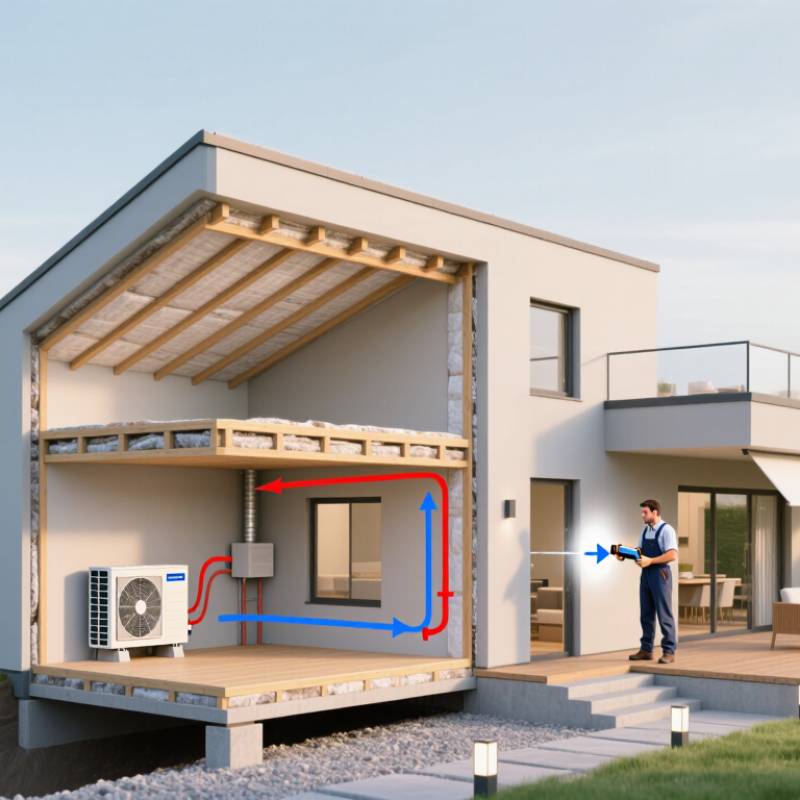
Assess a modular home’s actual performance before choosing upgrades. Collect at least 12 months of utility bills and note each bill’s dates, energy use, and weather. Compare similar seasons rather than monthly costs alone. The U.S. Energy Information Administration’s 2020 Residential Energy Consumption Survey found that space heating used 42% of household energy nationwide. That is a useful benchmark, not a modular-home average. Your home may differ because of climate, occupancy, and fuel type.
Walk through the home on a windy day. Check for drafts around window frames, exterior doors, plumbing penetrations, and the joints between modules. Look for uneven room temperatures, dusty streaks near supply registers, and damp insulation in accessible areas. Small clues matter. Ask a qualified energy auditor about a blower-door test and infrared imaging; together, they can help locate air leaks and missing insulation. Record the results before sealing anything, since blocking a needed ventilation path can create moisture problems.
Review heating and cooling equipment labels, thermostat settings, and filter condition, then check whether ducts run through unconditioned spaces. A simple spreadsheet can track monthly energy use and indoor temperatures. I would not judge efficiency from one unusually mild winter; that can make weak insulation look adequate. The EIA survey describes national patterns, not your home’s performance, so pair its data with measured findings and local weather.
| Performance area | What to record | How to assess it | How to interpret the result |
|---|---|---|---|
| Energy consumption | Monthly electricity use (kWh) and fuel use, if applicable | Review 12 months of utility bills and note billing periods, occupancy, and major changes in use. | Compare similar seasons and account for weather and household changes before judging whether use is unusually high. |
| Air leakage | Blower-door result in air changes per hour at 50 pascals (ACH50) | Ask a qualified energy auditor to perform a blower-door test and check common leakage points, including module joints, doors, windows, and utility penetrations. | Lower ACH50 indicates a tighter building envelope. Applicable targets depend on climate, building requirements, and ventilation needs. |
| Insulation | Insulation type and R-value for the roof, walls, and floor | Check construction documents where available; have an auditor inspect accessible areas and identify gaps, compression, or moisture damage. | R-value measures resistance to heat flow; higher values indicate greater resistance. Appropriate levels vary by climate and assembly. |
| Windows and doors | Window U-factor, air leakage, frame condition, and door seals | Look for product labels or specifications, damaged weatherstripping, drafts, and condensation between window panes. | A lower U-factor means less heat transfer through the window. Repairing failed seals or air leaks may be a practical first step. |
| Heating and cooling equipment | System type, age, capacity, and efficiency rating (such as AFUE, SEER2, or HSPF2) | Read the equipment nameplate or manual and arrange a maintenance check if service history is unclear. | Compare ratings only within the same rating system. AFUE describes seasonal fuel-use efficiency; SEER2 and HSPF2 rate cooling and heating performance under standardized tests. |
| Ductwork and airflow | Duct leakage, insulation, airflow, and room-to-room temperature differences | Inspect accessible ducts for disconnections or damaged insulation; have a technician test duct leakage and system airflow where needed. | Leaky or poorly insulated ducts can waste conditioned air, especially when located outside the heated or cooled space. |
| Thermostat settings | Occupied and setback temperatures, schedules, and system mode | Review the programmed schedule and compare it with actual occupancy and comfort needs. | As general U.S. Department of Energy guidance, about 68°F (20°C) in winter when home and awake and about 78°F (26°C) in summer when home may help reduce energy use, depending on comfort and conditions. |
| Ventilation and moisture | Ventilation equipment, bathroom and kitchen exhaust, indoor humidity, and signs of condensation | Check that exhaust fans operate and vent outdoors; inspect for persistent condensation, musty odors, or moisture damage. | Air sealing should be paired with appropriate ventilation. Do not block required vents or combustion-air openings. |
Note: Record actual test results rather than estimating them. Efficiency requirements and recommended insulation levels vary with climate, local codes, and the home’s design.
Check the roof, floor, and places where home sections join. A cold bedroom corner may point to compressed or missing insulation.
No. Check for moisture and identify its cause before covering the area. A home-energy professional can help.
On a windy day, feel around doors, windows, pipes, wiring, and attic hatches. Note each draft before making repairs.
Use sealants suited to each material, and keep required ventilation openings clear. That detail is easy to miss.
Well-fitted, efficient windows can help. Installation matters too; a narrow gap around the frame can let air through.
Replace worn weatherstripping and close curtains at night. Small steps help, though results vary by home and climate.
Log the upgrade date, energy use, and indoor comfort. Compare similar weeks and seasons, while noting weather and occupancy.
Not by itself. Check outdoor temperatures, occupancy, and rate changes before drawing conclusions. My first guess might be wrong.
Review thermostat settings and clean or replace HVAC filters as recommended. For persistent drafts, dampness, or uneven temperatures, seek a qualified assessment.
Improving a modular home’s energy efficiency starts with understanding how it uses energy. Review utility bills, check for drafts, and identify rooms that are difficult to keep comfortable. This assessment can reveal where improvements will have the greatest effect. Strengthen insulation in walls, floors, and ceilings, seal gaps around openings, and consider more efficient windows to reduce unwanted heat loss or gain.
Next, make sure heating, cooling, and ventilation systems are properly sized and maintained. Efficient lighting and appliances, paired with smart controls such as programmable thermostats, can help reduce unnecessary energy use. Track energy consumption over time to see whether changes are working, and maintain insulation, seals, equipment, and controls regularly. These practical steps offer a clear approach to how to improve energy efficiency in modular homes while supporting steady comfort and more responsible energy use.

 CovetNest Build